
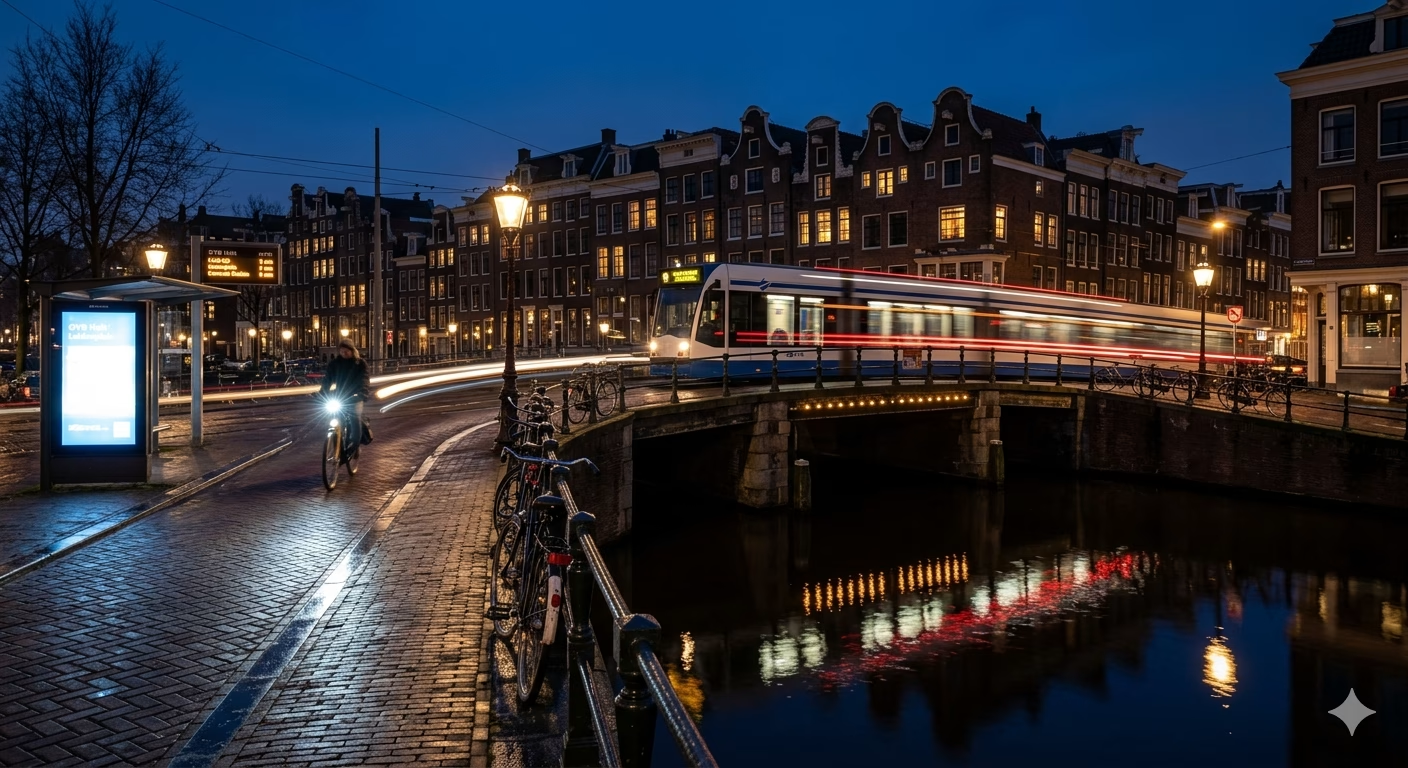
Amsterdam’s public transport is compact, frequent, and straightforward once you know which mode fits which trip. GVB runs the city network of trams, buses, metro, and ferries, and for most visitors the tram is the workhorse. It’s usually the quickest option for moving between Centraal Station, the Canal Belt, Leidseplein, Museumplein, De Pijp, and Oud-West without dealing with parking or canal detours. The metro matters more once you leave the historic core: it’s the better choice for Amsterdam Zuid, Station Bijlmer ArenA, and longer cross-city hops. A 1-hour GVB ticket is priced at about €3.20 in the original fare reference here, and it allows unlimited transfers within that hour. In practical terms, Trams 2 and 5 both stop at Rijksmuseum; from Amsterdam Centraal, expect roughly 10 to 15 minutes depending on traffic and how long you wait on the platform.
Before boarding, do a quick fare check: if you’ll take three or more rides in one day, a GVB day pass usually makes more sense than paying for separate 1-hour tickets. That matters in Amsterdam because distances are deceptive. A route that looks like a simple 20-minute walk on Google Maps can turn into 30 to 40 minutes once canals force you onto bridge crossings and busier streets. The tram saves the most time on awkward diagonal journeys that aren’t pleasant on foot, such as Centraal Station to Museumplein, Leidseplein to De Pijp, or Jordaan to Amsterdam Oost. For shorter center-only itineraries, walking still works well; for anything involving two neighborhoods and a museum slot, the tram is usually the safer bet.
Cycling is still one of the most practical ways to get around, especially for short daytime trips between neighborhoods like Oud-West, De Pijp, Jordaan, and Oost. Daily bike rental prices commonly start around €10-€15 for a basic city bike, but location changes the price more than many visitors expect. Near Amsterdam Centraal, Damrak, and other high-traffic tourist areas, it’s common to see rates closer to €15-€18 per day in high season. Walk 10 to 15 minutes out into Oud-West or De Pijp, and the same style of bike may be closer to €12 per day. Amsterdam is flat and the cycle lanes are excellent, but the riding style is brisk and local commuters do not slow down for hesitant tourists. Treat bike lanes as traffic lanes, not scenic space. If you rent, ask specifically for two locks: a frame lock for quick stops and a chain lock to secure the bike to a fixed stand. That extra minute matters around Centraal Station, Leidseplein, and busy canal-side racks, where theft is common.
For Amsterdam Noord, the free ferries across the IJ are one of the city’s best-value transport options and genuinely useful, not just scenic. They leave from the waterfront behind Amsterdam Centraal and run often enough that you usually won’t need to plan around them during the day. The most practical route for first-time visitors is the ferry to Buiksloterweg, a crossing of about 5 minutes. From that landing, it’s an easy walk to the A’DAM Tower and the EYE Filmmuseum. If you want to explore farther into Noord for industrial-chic cafés, cultural spaces, and waterside hangouts, take the ferry to NDSM Wharf; the crossing takes about 15 minutes. Because these ferries are free, they’re one of the easiest ways to expand your itinerary beyond the center without adding to your daily transport spend.
Real-time information helps more in Amsterdam than paper planning does. Trams can bunch up, metro platforms can change, and the ferry you want may be leaving in three minutes rather than ten. If you want mobile data as soon as you land, an eSIM can be simpler than hunting down a local SIM after arrival. Services like Telekonek offer plans starting at approximately $5 per week, which is enough for maps, GVB schedules, and messaging. That’s a small cost if it saves you from missing a connection at Centraal or defaulting to a much more expensive taxi for a trip that would otherwise have been a 10- to 15-minute tram ride.
- Best for central sightseeing: Tram — the easiest way to reach Museumplein, Jordaan-edge stops, Leidseplein, and the Canal Belt without long detours.
- Best for outer districts: Metro — faster for Amsterdam Zuid, Bijlmer ArenA/Zuidoost, and longer trips beyond the canal-ring center.
- Best budget crossing: Free IJ ferry from behind Amsterdam Centraal, especially to Buiksloterweg and NDSM.
- Best for short flexible trips: Bike rental at roughly €10-€15 per day, though central tourist-area shops often charge €15-€18.
- Useful timing rule: In the center, many tram rides take 10-20 minutes; the same journey on foot can easily take twice as long once canals and bridges are involved.
Exploring Amsterdam’s Neighborhoods: The Best Areas to Reside
Amsterdam is small, but your hotel location still changes how much effort each day takes. For this Amsterdam transportation guide, the sweet spot is a base within a 5–8 minute walk of a GVB tram stop or Metro 52 station. That usually means you can reach Centraal Station, Museumplein, and De Pijp with one direct ride or no transfer at all. In practice, that saves more time than shaving €20–€30 off a nightly rate and ending up in an area that needs two connections every time you head out.
De Pijp is one of the best “good location without canal-belt prices” picks. You’re close to Albert Cuypmarkt, Sarphatipark, and a dense run of casual bars and brunch spots, so it’s easy to fill a morning or evening without extra transit. Volkshotel, just east of the neighborhood near Wibautstraat, is a common budget-friendly option with rooms starting around €80/night (2023). Its real advantage is transport: it sits near Metro 51/53/54 at Wibautstraat, and from the De Pijp side you also have tram 3 and tram 4. Expect roughly 10–15 minutes to the center, depending on your exact stop. Compared with staying on the main canals, you’re usually trading postcard views for easier value and more everyday food options.
If your trip is built around museums, designer shopping, and smoother airport access, Amsterdam Zuid is the most efficient upscale base. You’re near P.C. Hooftstraat, Museumplein, and Station Zuid, which matters if you’re arriving by train from Schiphol and don’t want to drag luggage over canal bridges. Tram 12 gives a direct connection toward the museum district, while metro line 52 is the quickest north–south route in the city, often beating trams when you need to cross town fast. The Conservatorium Hotel starts around €400/night (2023), which is firmly splurge territory, but you’re paying for a location where many major sights are 10–20 minutes away by tram or metro. If Jordaan feels prettier but less practical with bags, Zuid is the opposite: less romantic, more efficient.
Jordaan is a strong fit for families and first-timers who want Amsterdam to feel scenic the moment they step outside. The appeal here is not transport speed but atmosphere: canals, quieter side streets, playgrounds, bakeries, and easy walks to the Anne Frank House area and the western Canal Belt. Linden Hotel lists rooms from roughly €150/night (2023). Treat Jordaan as a walk-first base, because the narrow streets, bridges, and limited tram penetration mean short trips are often easier on foot. For longer rides, nearby tram corridors are more useful than trying to travel within Jordaan itself; tram 5 is one practical option for reaching major sights, and many central trips come in around 10–20 minutes depending on where you board and traffic. The trade-off is simple: you get charm and calmer evenings, but not the fastest door-to-door transit.
For more space and a more local pace, Oost is one of the better-value bases. Around Oosterpark and the eastern residential streets, you get a less tourist-heavy feel, easier evenings, and generally a bit more room for your money than in Centrum or Jordaan. Generator Amsterdam, beside the park, is a popular budget option with rooms from about €50/night (2023). On the transit side, tram 7 and tram 14 are the key connectors into central Amsterdam, and most rides into the center take about 15–25 minutes. That makes Oost a smart compromise if you don’t mind a slightly longer ride in exchange for lower rates and a neighborhood that feels more lived-in than visited.
Before booking, check three things on the map rather than relying on the hotel description:
- Nearest GVB stop: keep it under a 10-minute walk; under 7 minutes is noticeably better if you’ll be out early and back late.
- Direct routes to your priorities: if you plan to spend most of your time around Centraal, Museumplein, De Pijp, or Zuid, a direct tram or metro line is worth more than a “central” label.
- Seasonal pricing: summer and peak weekends push rates up fast, especially in Jordaan and Zuid. A room that sits around €150 can jump well over €200–€250, while upscale properties rise even more sharply.
The practical takeaway: De Pijp is the best all-rounder, Zuid is the easiest for museum-heavy and train-connected stays, Jordaan is best if you want charm and don’t mind walking, and Oost gives you the most breathing room for the money without cutting yourself off from the center.
Must-Visit Attractions: Balancing Touristy Spots and Hidden Gems
For the “classic Amsterdam” stops, the tram really does save time. Rijksmuseum is one of the simplest major sights to reach: take Tram 2, 5, or 12 to Rijksmuseum and you’re essentially at the museum quarter. From there, the Van Gogh Museum is an easy 5–10 minute walk across Museumplein. That pairing works well because you avoid extra transfers and the traffic bottlenecks around Stadhouderskade. If you want both in one day, reserve timed-entry tickets in advance and aim for before 10:00 or after 15:30; midday is when both the tram stop and museum entrances feel most congested. As a rough budget, expect around €22.50 for the Rijksmuseum and €22 for the Van Gogh Museum, so this is a worthwhile cluster to plan properly rather than improvising on the day.
To offset those big-name sights with somewhere less packed, take Tram 7 toward Amsterdam East for the Tropenmuseum. Get off at Alexanderplein; from there it’s only a short walk to the museum entrance, with Oosterpark just 2–3 minutes away on foot. This is one of the easiest “hidden gem” swaps in an Amsterdam transportation guide because it feels noticeably calmer than the canal belt without being inconvenient. The cross-city ride from areas like Leidseplein or De Pijp usually takes about 15–25 minutes, depending on where you start. Give the museum 1.5–2 hours, then use the park as a reset before heading back west; on weekdays especially, it tends to be locals rather than tour groups.
For a completely different side of the city, head north to NDSM Wharf on the free ferry from Amsterdam Centraal. The ferries leave from behind the station on the IJ side; follow the signs to the ferry docks and allow 5 minutes to find the right pontoon if it’s your first time. The crossing itself is usually about 10–15 minutes. It’s free, frequent, and one of the best-value short rides in the city, with open views back toward Centraal and the old center. Once at NDSM, give yourself at least 2–3 hours if you want to do more than a quick look around. The area is best for wandering rather than checklist sightseeing: large-scale murals, reused warehouse spaces, waterside terraces, and enough room to breathe compared with Jordaan or the central canal ring. If your visit lines up with the monthly IJ-Hallen flea market, go early—ideally close to opening—because the best vintage and design stalls are picked over fast. Bring cash as backup even though many vendors now accept cards.
If you want something distinctly Dutch without the “tour bus stop” feel, Brouwerij ’t IJ is an easy detour. The brewery sits beside De Gooyer windmill, which makes it one of the few attractions that actually looks as good in person as it does in photos. From the center, Tram 14 gets you closest; get off near Pontanusstraat or Zeeburgerstraat and walk the last few minutes. From Amsterdam Centraal, the full trip is usually around 15–20 minutes. A tasting flight is typically far better value than ordering separate pours, and prices are generally more reasonable than in canal-side bars built around the view. It also works neatly with an Amsterdam East day: you can pair it with the Tropenmuseum, Artis area, or a walk along the eastern docks instead of making a separate evening trip.
- Time your rides: Avoid weekday peaks of roughly 08:00–09:30 and 17:00–18:30 if you can. Outside those windows, the same tram ride is not only more comfortable, but usually easier if you’re carrying shopping bags, museum souvenirs, or a daypack.
- Mind bikes at stops: When you step off a tram or bus, check both directions immediately. Around busy stops like Museumplein, Leidseplein, and Alexanderplein, cyclists often pass close to the platform edge.
- Plan “clusters” to cut transfers: Group Museumplein sights together, pair Tropenmuseum with Oosterpark and possibly Brouwerij ’t IJ, and treat NDSM as a separate half-day outing using ferry + walking. You’ll spend less time doubling back through Centraal or changing lines.
Mastering Transport: Your Guide to Efficiently Navigating the City
Amsterdam is easy to navigate once you match the mode to the trip. In most cases, trams do the heavy lifting in any practical Amsterdam transportation guide: they run roughly from 6 AM to around midnight and are usually the simplest way to move between Centraal Station, the canal belt, Museumplein, De Pijp, and Oud-West without dealing with traffic or parking. Tram 19 is a useful cross-city line, running from Sloterdijk through the eastern docklands to Diemen, but for visitors the more useful habit is checking which tram stops closest to your destination rather than memorizing the whole map. A 1-hour GVB ticket costs about €3.20–€3.40 and allows unlimited transfers on GVB trams, buses, and metro during that hour, which makes it good value if you’re chaining two short rides instead of taking one direct trip.
Buses are less essential in the historic center but become more useful once you head into outer neighborhoods or return late. Amsterdam’s night buses take over after the daytime tram and metro network winds down, which matters if you stay outside the canal belt or plan a late evening in areas like Amsterdam Noord or Nieuw-West. If you’re crossing the IJ, the ferries behind Amsterdam Centraal are one of the city’s best transport bargains because they’re free. The Buiksloterweg ferry gets you to Amsterdam Noord in about 5 minutes, while the NDSM ferry takes closer to 15 minutes and is the one to use for the wharf area, street art, and waterside bars.
If you expect to make several rides in a day, a pass is usually cheaper than buying single-hour tickets. The I amsterdam City Card starts at about €65 for 24 hours and includes unlimited GVB transport, so it only makes sense if you’ll also use the museum entries and extras bundled into the card. If transport is your main concern, a standard GVB multi-day ticket is often the better deal: for example, a 1-day pass is typically far cheaper than the City Card and pays off after roughly 3 rides. That’s the better choice for a museum-heavy day that starts at Centraal, continues to Museumplein, then ends in De Pijp or Jordaan.
Uber and Bolt are both widely used, but they’re best treated as backup rather than default transport. A short ride within the center can cost around €10–€15 in quiet periods, but surge pricing can push that much higher on rainy evenings, after concerts, or around weekend bar-closing time. They’re most useful when public transport has thinned out, when you’re carrying luggage, or when you’re traveling to an address that would otherwise require a tram-bus transfer.
Biking is the classic Amsterdam move, but it’s only fun if you’re comfortable riding in busy cycle traffic. Rental shops such as MacBike generally charge around €10–€20 per day, with basic city bikes at the lower end and e-bikes or insurance packages pushing the total higher. For a visitor, bikes make the most sense for Vondelpark, the Amsterdamse Bos, the Eastern Docklands, or a half-day ride between neighborhoods; they’re less relaxing in the tightest canal-belt streets where locals move fast and know the rules. Always use two locks if possible, and never leave a rental loosely secured near Centraal or Leidseplein overnight unless you’re happy paying a replacement fee.
Walking is often faster than people expect. In the old center, many headline sights are only 10–20 minutes apart on foot: Dam Square to the Anne Frank House is about 20 minutes, and Centraal Station to the Nine Streets is roughly 15–20 minutes depending on the route. Around the canal belt, walking also saves the time you’d otherwise spend waiting for a tram for a journey that lasts only a couple of stops. Good shoes matter more here than most guides admit; bridges, brick streets, and cobblestones add up quickly over a full day.
- Use trams for cross-center trips and museum runs.
- Use ferries for Amsterdam Noord and the NDSM area; they’re free and frequent.
- Use buses mostly for outer districts or late-night returns.
- Rent a bike only if you’re confident in dense cycle traffic.
- Walk whenever your route is under 20 minutes in the center; it’s often the quickest option.
If all the choices feel like too much, keep it simple: walk inside the canal belt, take trams for anything longer, use the ferry when heading north, and only pay for ride-hailing when time or luggage makes it worth the extra cost.
A Taste of Amsterdam: Dive into Local Cuisine and Coffee Culture
Amsterdam’s food scene is easy to fold into a sightseeing day because many of the city’s best-known local bites sit right on major tram routes. Start with stroopwafels at Albert Cuyp Market in De Pijp, one of the easiest food stops to reach in this Amsterdam transportation guide. The market is a short walk from the Albert Cuypstraat area, typically reached via tram or Metro 52 to De Pijp, depending on where you’re starting from. Fresh stroopwafels usually cost about €3.50–€5 for one warm from the griddle, and they’re much better here than the pre-packed supermarket version. If you want something more local and less sweet, try raw herring with onions and pickles; expect to pay around €4–€6 from a fish stand. Go before 1 PM if you want the market at its liveliest without the shoulder-to-shoulder late-afternoon crowds.
For coffee, the Jordaan works well because you can combine it with a canal walk and reach it easily by tram from the center. Winkel 43, famous for apple pie, is near the Noordermarkt area and is a solid stop if you want a classic brown-cafe atmosphere rather than third-wave coffee minimalism. A coffee is usually around €3–€4.50, while a slice of the apple pie most people come for is roughly €6–€8. If you prefer specialty coffee, Lot Sixty One Coffee Roasters on Kinkerstraat is a better bet than lingering in the busiest central cafes. It’s about a 5–8 minute walk from Elandsgracht, and an espresso-based drink typically runs €3.50–€5.50. In practical terms, Jordaan feels more old Amsterdam; Kinkerstraat in Oud-West is more local and design-forward.
If you want variety without spending half the day crossing town, Foodhallen in Oud-West is one of the easiest all-in-one food stops. Served by Tram 13 and also convenient from the Ten Katestraat side of the neighborhood, it’s useful if your group can’t agree on one cuisine. Prices are higher than at street markets: expect roughly €8–€14 per dish and €3.50–€7 for drinks. You’ll find everything from Dutch bitterballen to tacos, dim sum, and Vietnamese snacks, so it works best as a grazing stop rather than a single sit-down meal. Aim for late afternoon on weekdays if possible; Friday nights and rainy weekends get packed fast, and finding a table can take longer than the tram ride there.
Transport timing matters more around food spots than many visitors expect. Albert Cuyp Market, Jordaan, and Oud-West all get noticeably busier from about 8–9 AM and again from 4:30–6:30 PM, especially on tram routes feeding the center. If you’re planning a market breakfast, coffee stop, and Foodhallen lunch or dinner in one day, the math usually favors an unlimited pass over buying separate tickets. The Amsterdam Travel Ticket, which grants unlimited travel on public transport for a day, cost about €17 in 2023. By comparison, with a 1-hour GVB ticket at around €3.40 in 2023, you only need several rides in a day for the pass to start making sense. For live route changes, platform information, or checking whether a tram diversion affects your food detour, this is also the point where staying connected helps more than a guidebook ever will.
- Best quick local snack stop: Albert Cuyp Market for stroopwafels and herring.
- Best classic cafe stop: Winkel 43 in Jordaan for coffee and apple pie.
- Best specialty coffee detour: Lot Sixty One on Kinkerstraat.
- Best group food option: Foodhallen, especially if everyone wants something different.
Budgeting for Your Journey: Understanding Costs and Savings
Amsterdam is manageable on a mid-range budget, but transport, hotel location, and ticket timing make a bigger difference here than in many European capitals. For getting around, a 1-hour GVB ticket costs about €3.40 (2023 pricing), while a 1-day GVB pass starts at €9.00. If you expect to make more than 3 public transport trips in a day, the day pass usually works out better than buying single tickets. For example, a tram from Centraal Station to Museumplein, then on to De Pijp, and back toward the center already puts you close to day-pass value. If your plan is mostly canals, Jordaan, and the center on foot, single tickets can be cheaper.
The I amsterdam City Card can be good value, but only if you’ll actually use both the transport and museum benefits. It includes GVB public transport in the city and free entry to many attractions, so it tends to pay off for travelers doing 2 museums a day plus regular tram or metro rides. It is not the cheapest option for a slower trip focused on walking, one major museum, and a canal-side wander. Before buying, compare the card price against the attractions you already know you want to visit.
Accommodation is where budgets usually blow up fastest. Hostel beds in central areas typically run about €25–€50 per night at the low end, but that can jump to €60–€90 on summer weekends or around major events. A reliable mid-range option such as Hotel ibis Amsterdam Centre often falls around €100–€180 per night, though April through August regularly pushes similar central hotels above €200. Areas with direct transport but slightly lower rates — such as Amsterdam Oost, De Pijp, Amsterdam Noord near the Metro 52 line or ferry links, and Sloterdijk — can save you €20–€80 per night compared with staying right by Dam Square or the innermost canal belt.
That trade-off is usually worth it if the route is simple. A hotel near Station Zuid, Amsterdam Sloterdijk, or a Metro 52 stop can still get you into the center in roughly 5–15 minutes, which is often a better deal than paying premium prices for a canal-view room you only use to sleep. Book at least 3–6 weeks ahead for spring and summer; in tulip season and on holiday weekends, the same room can move from around €140 to €250+ a night.
Food is one of the easier places to control spending. A quick meal from FEBO or a snackbar usually lands around €5–€10, while a casual lunch at a café is more often €12–€18 once you add a drink. At the higher end, dinner at a destination restaurant like De Kas can run €50–€80 per person before drinks. For better-value local eating, Albert Cuyp Market in De Pijp is a practical stop: you can piece together lunch from stroopwafels, herring, kibbeling, or fresh market snacks without committing to a full restaurant bill. Food halls and bakery lunches are another good middle ground if you want to spend more like €10–€15 than €30–€40.
Attraction costs add up quickly if you don’t plan ahead. Many major sights are covered by the I amsterdam City Card, which is why it can be a real saver for museum-heavy days. Others are not. Anne Frank House generally needs a separate paid ticket and often sells out well in advance, so this is one place where waiting until you arrive can cost you the visit entirely, not just more money. Canal cruises also usually cost extra, commonly around €10–€20 for standard options, with evening or specialty cruises costing more.
A smart daily budget for many visitors looks roughly like this:
- Budget day: €60–€110 excluding accommodation if you walk a lot, use limited transport, eat casually, and choose only one paid sight or none.
- Mid-range day: €120–€220 excluding accommodation if you use a GVB day pass, visit 1–2 attractions, and eat at a mix of cafés and one nicer dinner spot.
- High-spend day: €250+ excluding accommodation once you add premium dining, multiple paid sights, taxis, or higher-end canal cruises.
Amsterdam is also increasingly cashless. Cards are widely accepted, but it’s still sensible to carry a small amount of cash for markets, smaller shops, or the occasional place with card restrictions. Tipping is modest by local standards: service is often already built into menu prices, so rounding up or leaving about 5–10% for genuinely good service is enough. There’s no need to tip heavily on every coffee or quick counter meal.
Staying Connected: Navigating Digital Needs in Amsterdam
Reliable mobile data makes this Amsterdam transportation guide much easier to use in real time, especially if you’re checking GVB routes on the move, loading Google Maps, or buying tickets online. An eSIM is usually the simplest setup if your phone supports it. Providers such as Airalo have offered Netherlands plans starting at about €4 for 1GB (2023 pricing), which is enough for light map use and messaging over a day or two. If you expect to navigate heavily, stream audio, or use translation apps, step up to a larger package rather than topping up repeatedly. The main advantage is convenience: you can install the eSIM before departure and activate it when you land at Schiphol, so you’re online before you even reach the train platforms.
If your phone is locked, doesn’t support eSIM, or you’re traveling with several devices, a pocket Wi-Fi rental can make more sense. Companies like Tep Wireless have rented hotspot devices from roughly €5 per day, and one device can cover a couple, family, or a small group at once. That can be cheaper than buying separate data plans for everyone, but check the small print on battery life and fair-use limits. A hotspot is most useful on longer sightseeing days when several people need maps, messaging, and ticket access at the same time.
Free Wi-Fi is easy to find in central Amsterdam, but it’s best treated as backup rather than your main connection. The Openbare Bibliotheek Amsterdam (OBA), near Centraal Station at Oosterdokskade, is one of the most practical places to log on: it has free Wi-Fi, plenty of seating, and a calm indoor space if you need 30–60 minutes to plan routes, download tickets, or sort out accommodation. Café De Jaren on Nieuwe Doelenstraat is another dependable stop if you want a coffee break with Wi-Fi in the center. As a rule, order at least a drink if you plan to sit and use the connection, and don’t assume every café network will be fast enough for video calls during busy hours.
Hotel and hostel Wi-Fi in Amsterdam is usually free, but speeds vary a lot by property. Mid-range hotels tend to be fine for normal travel use, while budget hostels can slow down noticeably in the evening when everyone is back uploading photos and streaming. If you know you’ll need stable service for work, double-check recent reviews for actual speed comments rather than just trusting “free Wi-Fi” in the listing.
To keep data use under control, download what you need before leaving your accommodation each morning. Offline maps in apps like Maps.me are useful, and downloading an area in Google Maps works well too if you mainly need walking directions between tram stops, metro stations, and attractions. Turn off background app refresh for apps you don’t need, and save larger tasks — cloud backups, app updates, video uploads — for hotel Wi-Fi. That matters more than it sounds when you’re out all day moving between Centraal Station, Museumplein, De Pijp, and the canal belt and checking directions every hour.
- Best setup for most visitors: eSIM with at least a small data package, activated on arrival at Schiphol.
- Best for families or groups: pocket Wi-Fi at around €5/day if multiple people need one shared connection.
- Best free Wi-Fi stop: OBA library at Oosterdokskade, a short walk east of Centraal Station.
- Most data-saving move: download maps each morning and avoid using public Wi-Fi as your only plan.
Enjoying Amsterdam Safely: Essential Etiquette and Safety Tips
Amsterdam is easy to get around, but the biggest safety issue for most visitors is not crime, it’s stepping into a bike lane without realizing it. Bike traffic moves fast, often silently, and locals do not slow down much for distracted pedestrians. Treat red-painted lanes, lanes marked with bike symbols, and crossings beside tram tracks as active traffic space. Before crossing, look left, right, then left again, and check for bikes even when the street seems quiet. This matters most around Centraal Station, Damrak, Leidseplein, Rembrandtplein, and Museumplein, where tram stops, bike lanes, taxis, and crowds all overlap. When getting off a tram, step onto the platform or curb first if possible, then check for cyclists before moving away from the stop.
Tram etiquette also makes a difference. Let passengers exit before boarding, and move away from the doors once inside, especially on busy lines like Tram 2, 4, 12, and 17. Keep backpacks low or hold them by your side during rush hour so you are not blocking the aisle. If you are standing, hold on properly: Amsterdam trams brake hard and take corners quickly. On escalators in stations such as Amsterdam Centraal or Rokin, stand to the right and walk on the left.
Pickpocketing is the most common tourist problem, particularly in crowded transit areas rather than on quiet residential streets. Be extra alert at Amsterdam Centraal, on trams serving major sights, around Dam Square, and in busy shopping stretches like Kalverstraat. Thieves often work when people are juggling phones, paper maps, luggage, or ticket machines. Keep your wallet in a zipped front pocket or an inside bag compartment, and avoid leaving your phone on café tables near the edge. If someone creates a distraction near a tram door or ticket machine, check your belongings immediately.
Be wary of transport-related scams. Do not get into cars offered by unofficial drivers outside Centraal Station, Schiphol, or nightlife areas. If you need a taxi, use the official taxi rank or book through a licensed app. A legitimate taxi from Schiphol to the Canal Belt usually costs around €45–€60 depending on traffic and exact destination; if someone quotes far above that without using the meter, walk away. The same goes for “skip-the-line” attraction tickets sold on the street near Dam Square or Central Amsterdam canals. Buy directly from official attraction websites, the GVB app, or staffed counters.
At stations and tram stops, give yourself a little more time than you think you need. Amsterdam’s transport network is straightforward, but platforms can be busy and cyclists often pass directly behind shelters and stop islands. Arriving 5–10 minutes early means you can find the right platform, tap in calmly, and avoid rushing across tracks or bike lanes. Late at night, stick to well-lit stops and main routes, especially if you are traveling solo. If a tram or metro car is nearly empty, sit closer to the driver’s section or where other passengers are gathered.
For emergencies, dial 112 for police, fire, or an ambulance anywhere in the Netherlands. For non-urgent police assistance, call 0900-8844. If your passport is lost or stolen, contact your embassy or consulate and ask your hotel to help with local reporting if needed. It is smart to save these numbers offline and keep a photo of your passport, visa, and travel insurance details in secure cloud storage or an email folder you can access from another device.
Staying connected is practical here, not just convenient. Real-time access to GVB schedules, platform changes, walking directions, and taxi apps makes moving around Amsterdam safer and less stressful, especially after dark or during disruptions. If your phone supports eSIM, set it up before you fly so you are not hunting for mobile shops after landing at Schiphol. Telekonek can be a workable option for Netherlands data if the pricing suits your trip, but compare it with common travel eSIMs and look for at least 3–5GB if you plan to use maps heavily. Even light navigation can burn through 1GB faster than expected over 3–4 days.
- Watch for bikes first: especially when exiting trams or crossing near Centraal, Dam Square, and Museumplein.
- Use official transport only: licensed taxis, the GVB app, official ticket machines, and attraction websites.
- Protect valuables in crowds: zipped bags, front pockets, and no phones left loose on tables or tram seats.
- Arrive a bit early: 5–10 minutes helps you avoid risky last-second dashes across tracks or bike lanes.
- Save key numbers: 112 for emergencies, 0900-8844 for non-urgent police.