Rugby’s Greatest Stage: Experience the 2027 Six Nations in the Heart of Paris
A Closer Look at the Six Nations Festival 2027
The Six Nations isn’t a one-off match night — it’s a rolling winter ritual that takes over Europe for weeks, with France’s home fixtures anchoring some of the loudest days on the calendar.
Historically, the championship began in 1883 as the Home Nations, expanded to the Five Nations with France, and became the Six Nations in 2000 when Italy joined. That history shapes the mix you’ll see on Paris match weekends: older-school Franco–British rivalry energy, plus big, social groups of Italian supporters who tend to claim a “home base” bar and stay put for the whole afternoon.
In Paris, the rugby is the headline, but the city’s version of the festival is really a full-day (and often full-weekend) circuit: a late lunch and first pint in jersey-clad cafés, a noisy run up to Saint-Denis on the RER, then a post-whistle drift back toward brasseries and late bars. When people talk about Six Nations festival events in Paris 2027, they usually mean that whole ecosystem — the stadium day plus the surrounding meetups, screenings, and fan rituals that make it feel bigger than an 80-minute game.
What should feel special about 2027 is the combination of tournament intensity and a Paris crowd that’s become increasingly event-savvy in recent years: more organized meetups, more multilingual signage, and tighter crowd management around major fixtures. This guide walks through everything you need to plan a great weekend — fixtures, where to watch, where to eat, transport, budget, and the small habits that separate a smooth trip from a chaotic one.
Quick orientation:
- Venue: All France home matches are at Stade de France in Saint-Denis, just north of central Paris.
- Best home bases: Around Gare du Nord (RER B), Châtelet–Les Halles (RER B/D plus multiple Métro lines), or Opéra/Grands Boulevards.
- Where the “festival” feel actually lives: Match-day pub corridors around Châtelet, Grands Boulevards, Oberkampf, and République.
Key Matches and Dates: What to Plan Around
Important reality check: As of 2026, the official 2027 Six Nations match calendar may not yet be fully published. The Six Nations typically confirms exact fixtures and kick-off times well in advance of the tournament, but treat the list below as a planning framework. Once fixtures and ticket on-sale dates are confirmed, lock in two things immediately: a bed with an easy RER link, and a dinner reservation you actually care about (especially if you’re aiming for a 21:00–22:30 brasserie slot).
On the biggest weekends, central hotels jump from roughly €140–€220/night to €250–€400+ within walking distance of major stations. A useful rule once dates are published: book at least 3–4 weeks ahead, or accept smaller rooms at inflated rates.
France vs England — “Le Crunch”
The weekend that warps everything: ticket demand, room prices, and the post-match crush. Lower-bowl tickets spike fastest on resale because it’s the “once in a lifetime” pick for many visitors. If you want primary-market tickets, plan to be ready the minute sales open. Walk-in restaurant options in the 9th, 2nd, and around Madeleine thin out fast — a 22:00+ reservation is more realistic than promising yourself an 8:30 dinner.
France vs Ireland
Often the “decider” feel. The crowd mix is typically more rugby-focused (fewer casual spectators), and it’s a great match to build a full Saturday around without quite the same all-consuming chaos as Crunch weekend. If you want a big atmosphere with slightly saner logistics, this is the sweet spot.
France vs Italy
Typically the most accessible Paris ticket on the primary market and the easiest fixture to plan around without paying top-tier premiums. If your priority is the full Stade de France ritual (anthem, walk-in, the scale of the place) rather than the biggest rivalry, this is the value pick — especially for first-timers.
France vs Scotland or France vs Wales
One of these usually lands in Paris depending on the rotation. Both bring serious traveling support and can sell quickly. On vibe alone: Scotland tends to bring a very visible, singy crowd in the city all day; Wales often travels in big groups and keeps the pubs busy late.
Festive Experiences: Activities Beyond the Game
Paris rarely runs one giant official fan park the way some host cities do. Instead, the festival energy lives in reliable corridors and a handful of cultural anchors that work brilliantly as match-weekend day plans.
Daytime culture you can actually finish
If you’re balancing rugby travelers with non-rugby travelers, pick winter-friendly experiences that fit a 2–3 hour window so you can still make a long lunch (or a nap):
- Musée de l’Armée (Les Invalides) — A strong rugby-weekend pick: thematically appropriate, well-paced, and finishable. Tickets typically €15–€25 (2026).
- Musée d’Orsay or Centre Pompidou — Classic “I came to Paris” picks if half your group is there for sightseeing.
- Sainte-Chapelle — A 30-minute jewel-box visit if you only have a sliver of free time.
Evening “proper Paris” moments
For a memorable non-rugby night between fixtures:
- Opéra Garnier — The classic wow-factor; tickets €30–€120+ depending on date and seats.
- Le Trianon (18th) — Concert-night vibe without full opera formality.
- Seine evening cruise — Touristy, but genuinely good on a clear winter night.
Match-day “festival corridors”
When match-day energy actually shows up in the city, it’s usually in these zones:
- Canal Saint-Martin → République (10th/11th) — Pre-game terrace circuit; easy to do a “two stops and a snack” daylight loop.
- Châtelet–Les Halles → Grands Boulevards (1st/2nd/9th) — Densest pub crowds and the biggest “fan corridor” energy on screening days.
- La Villette (19th) — Set up for winter programming and large pop-ups; if a “fan village”-style activation appears in 2027, it’s likely here because the area can absorb crowds without bottlenecking small streets.
Parades and pop-up moments
Official fan moments do happen, but they’re fluid year to year. When they appear, they usually land in spaces Paris can manage: big plazas (Hôtel de Ville), wide boulevards (Champs-Élysées-adjacent), and transport-friendly zones. Watch official Six Nations and Paris tourism channels in the weeks before the tournament.
Where to Watch the Matches: Best Venues and Pubs
For a guaranteed “everyone’s here for the rugby” atmosphere, base yourself in the Irish-pub belt around Châtelet–Les Halles and the Grands Boulevards. These zones are easiest for mixed groups because you’re sitting on top of multiple lines (Métro 1/4/7/11/14 plus RER A/B/D at Châtelet–Les Halles), so nobody’s stuck on a late-night trek home.
The reliable picks
- The Auld Alliance (5 Rue Saint-Denis, 1er) — The loud option: multiple screens, standing-room energy, a crowd that actually sings when momentum swings. 5–10 minutes’ walk from Châtelet, with multiple lines to peel off to if one entrance is jammed.
- Corcoran’s Grands Boulevards (near Richelieu–Drouot) — Mixed crowd of French and visiting fans. Especially useful on France home weekends, when smaller neighborhood bars feel “locals-only” by kickoff.
- The Moose (Odéon area, Saint-Germain) — Comfortable, English-language service, easier to actually get a seat. Good for visitors who want a calmer base.
Different vibe, same energy: Oberkampf / République (11th)
Less expat, more local brasserie energy. Bars along Rue Oberkampf often put the match on with sound when France plays, and the big advantage is what happens after: you can bounce on foot to the next spot instead of re-entering the Métro. The trade-off is visibility — many spots do “we show the game” with one screen above the bar, so arrive 60–90 minutes early if you care about a clean sightline.
Pricing reality (2026 ranges)
- Central pints (Châtelet, Saint-Germain): €7–€10
- Oberkampf: €6–€8 — often the better all-afternoon value
Two things that ruin match night
- “We show the game” sometimes means one muted screen. Always ask “avec le son?” before you commit, and ask where your specific table will be — a “yes” can still mean a back room with a partial view.
- The full-time bottleneck around Châtelet and Gare du Nord. If you’re leaving a packed bar right at the whistle, walk one Métro stop to a quieter station before tapping in (e.g., from Châtelet, stroll toward Hôtel de Ville or Étienne Marcel).
Public screenings — the wild card
If a city-backed fan zone pops up, prioritize it for daytime matches. For evening kick-offs, pubs remain the safer bet: you control your neighborhood, your food options, and your post-match route home.
Dining Delights: Where to Eat During the Festival
The smartest approach is to split your eating into two geographies: Saint-Denis for pre-/post-stadium logistics (fast, filling, no-fuss), and central Paris for the proper meal once you’re back on dense connections.
Near Stade de France (Saint-Denis)
You’re here for timing and calories, not candlelit bistros.
- Hippopotamus Saint-Denis – Stade de France — Reliable group anchor: big room, familiar steaks/burgers menu, around €18–€30 per person.
- Around the Basilique de Saint-Denis — North African and Turkish spots doing fast couscous, mixed grills, and döner (€8–€15) when you need to keep moving.
Match-day timing: If you want to sit down in Saint-Denis, target being seated 2–3 hours pre-kickoff. Leaving it later means hitting queues plus slower kitchens at exactly the wrong time.
Back in central Paris
Two traps to avoid: tourist-menu places near big hubs, and restaurants that stop seating just as your group regroups.
- Au Pied de Cochon (Châtelet/Les Halles) — The late-night safety valve: classic onion soup, escargots, pork specialties; mains €20–€35.
- Bouillon Chartier (Grands Boulevards) — High-capacity Paris institution, often €8–€18 per dish (genuinely low for Paris). Expect a queue at peak times.
- Rue Sainte-Anne (1st/2nd) — Compact ramen/Japanese corridor for when half your crew is tired of pub plates.
What to plan for
Right after the final whistle, Saint-Denis kitchens get overwhelmed and some close earlier than you’d expect for Paris. Your safe options: eat before you enter the stadium zone, or commit to leaving Saint-Denis fast and eating near a transfer hub (Châtelet–Les Halles, Gare du Nord, Strasbourg–Saint-Denis), where late service is more predictable.
Quick picks:
- Closest to stadium (€8–€15): Saint-Denis grills, couscous, döner
- Group-friendly seating (€18–€30): Hippopotamus Saint-Denis – Stade de France
- Late-night French classic (€20–€35): Au Pied de Cochon
- Budget institution: Bouillon Chartier
Getting Around: Match-Day Transportation
This is the section that decides whether your weekend feels like Paris or like a queue.
The two workhorse routes to Stade de France
| Route | From | Time on train | When it’s the right call |
|---|---|---|---|
| RER B → La Plaine–Stade de France | Gare du Nord (1 stop) | ~5–7 min | You’re based around Canal Saint-Martin / Gare du Nord |
| RER D → Stade de France–Saint-Denis | Châtelet–Les Halles (~2 stops) | ~8–10 min | You’re already drinking around Châtelet |
After the train, both options involve a stewarded 10–15 minute walk to the stadium perimeter. The “best” line is the one that minimizes cross-city positioning before you even start — don’t trek across town to a different RER unless you have to.
Match-day timing that actually works
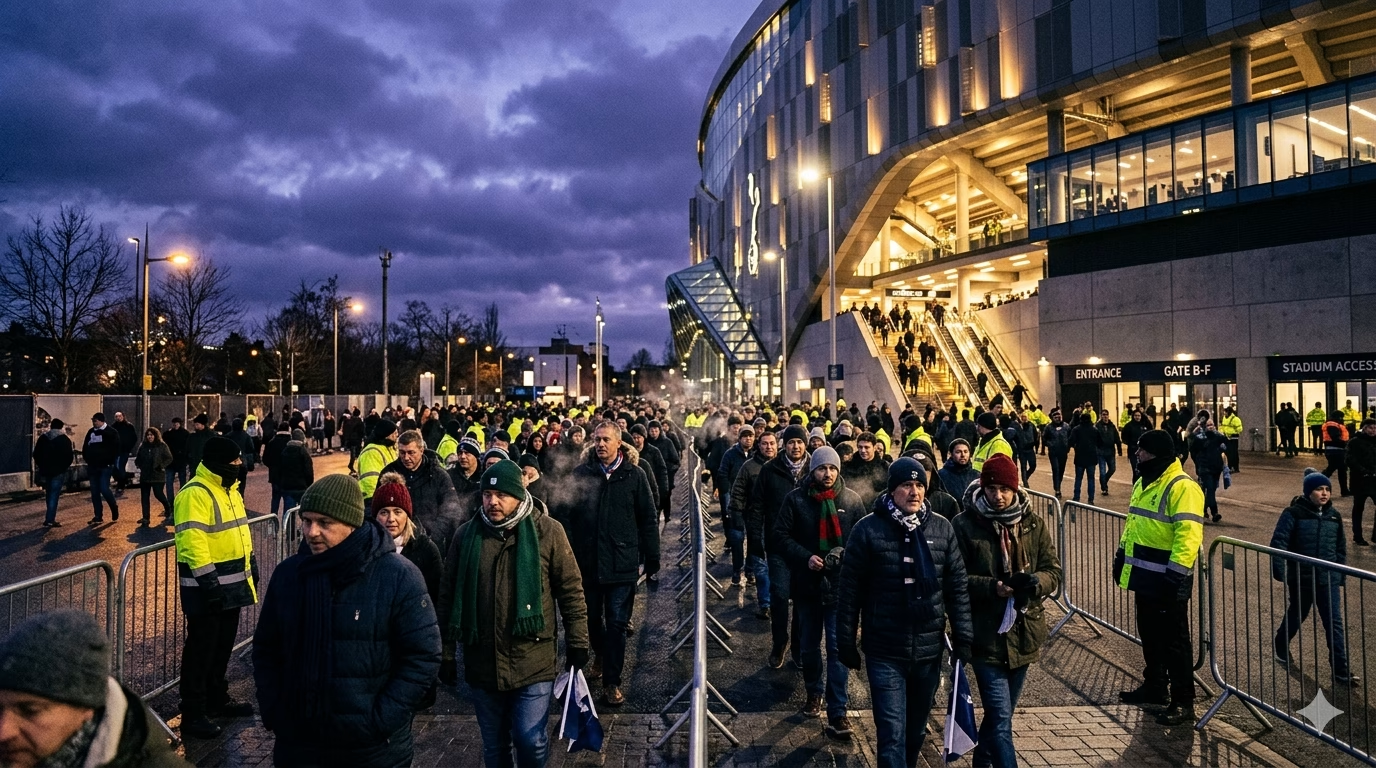
- Aim for the stadium station 60–90 minutes before kick-off. The trains aren’t the bottleneck; turnstiles and bag checks are.
- Door-to-seat: Budget 45–75 minutes from “leaving your hotel near a central station” to “in your seat.”
- Post-match: Expect 30–60 minutes clearing the perimeter and station queues before you’re even on a train.
Fares and tickets (2026)
Paper carnets are essentially gone. Use Navigo Easy (reloadable) or phone-based tickets. Single rides are roughly €2–€3. Budget at least 4 rides for match day. If you’re bouncing between Canal Saint-Martin, Châtelet pubs, and Saint-Denis, a Navigo Jour day pass is often cleanest.
Load tickets before heading north — machine queues at major stations are exactly what you don’t want 90 minutes pre-kick.
Routing tools
- IDF Mobilités — Official source for disruptions and planned works.
- Citymapper — Better for “in the moment” decisions: which end of the platform to stand on, when a quick line swap saves 10–15 minutes.
The post-match exit (where most plans unravel)
Everyone hits the same RER gates at once. Mobile data slows. Ride-hail apps melt into cancellations and surge pricing. Two strategies that consistently work:
- Beat the surge: Leave your seat a few minutes before full time (especially if you’re high up).
- Wait it out: Stay local in Saint-Denis for 45–90 minutes for one drink or a bite, then travel once the first wave clears. This often gets you home faster.
If you need a rideshare: Don’t request from the stadium perimeter. Walk 15–20 minutes toward La Plaine’s business blocks or a wider boulevard where cars can pull over, then book.
The single most important rule
Pick a hard meeting point before the match. Not “outside the stadium” — every exit looks the same and there are several “big signs.” Pick a specific named entrance (e.g., “La Plaine–Stade de France RER B entrance, by the newsstand”) plus a time stamp. If your group gets split inside the venue, agree in advance on one named station to regroup at. This single rule prevents the classic 30–45 minute hunt with dying phones.
Staying Connected: Mobile Options and eSIMs in Paris
Your phone is your match-day coordinator: Citymapper for real-time RER updates, group chats for “we’re at Gate X,” and a shared location pin when your crew gets split at Châtelet–Les Halles.
Coverage is generally excellent across the inner arrondissements (solid 4G/5G), but expect slowdowns right after the final whistle around Stade de France — tens of thousands of people all messaging, booking rides, and uploading clips at once.
Best for most travelers: eSIM, set up before you fly
If your phone supports eSIM, install it at home on Wi-Fi so you land with data already working — no shop hunt, no language friction. (For more on the data side specifically, see our guide on cheap mobile data in Europe for tourists.)
- Typical 2026 pricing: ~€10–€25 for a few GB over 7–15 days.
- “Unlimited” plans often have a fair-use throttle — fine for maps, messaging, mobile tickets, and light social posting; less ideal for long livestreams from packed pubs.
- For 2FA on your home number: Keep your home SIM active for calls/SMS but set your eSIM (e.g., Telekonek) as the default for mobile data to avoid accidental roaming charges.
The Telekonek setup for a Paris match weekend
For travelers landing at CDG or Orly, Telekonek’s France eSIM is the path of least resistance. Install it at home on Wi-Fi before you fly, set it as your default data line, and keep your home SIM active for calls and 2FA texts. You’re online the moment you taxi to the gate — no airport kiosk hunt, no language friction at a Relay newsstand, no surprise roaming bill on Monday morning.
What this gets you on a match weekend:
- Predictable cost. Short-trip plans for France start around $5/week (2026), so your data line is sorted before you’ve even booked your hotel.
- Coverage where you actually need it. Solid signal across inner Paris plus the RER corridor up to Saint-Denis — which is exactly when everyone else’s data starts choking at the stadium gates.
- Multi-country flex. If you’re tacking on Brussels, Amsterdam, or another European stop after the match, you’re already in Telekonek’s wider 200+ country footprint without needing a new SIM.
- Activates before you board. Scan a QR code on home Wi-Fi, name the line (“France data”) to keep it straight, and flip it on after touchdown. No fumbling at customs while a 4-hour Eurostar queue forms behind you.
If you prefer a French physical SIM
Orange Holiday-style tourist packs are the simplest plug-and-go option. Find them at Relay newsstands and mobile shops around Gare du Nord, Châtelet–Les Halles, and along major boulevards. Budget €20–€50 (2026 range) depending on data and validity. SFR and Bouygues are fine alternatives, but stock and setup help vary by store.
Avoid: airport SIM kiosks
CDG and Orly kiosks are usually a bad combination of pricey and slow. When multiple flights land, queues run 30–45 minutes — and you may then discover your handset is eSIM-only or your plan needs a fiddly activation step. Wait until you’re near your hotel. (If you’re connecting through Paris with a long layover and tempted to leave the airport, read our short-layover guide first — visa and re-entry rules can catch you out.)
Match-day phone setup
Before you leave your accommodation:
- Download offline maps for Saint-Denis and central Paris.
- Screenshot ticket QR codes, your seat info, and your pre-game spot’s address.
- Drop a pin in your group chat for the meeting point (with the exact exit name).
- Pack a power bank — 5G + camera + navigation will kill a phone before you’re back at Châtelet.
Wi-Fi caveats
Café and brasserie Wi-Fi gets unreliable during peak rugby hours (everyone posting, contactless terminals running). Some busy pubs around Châtelet keep Wi-Fi intentionally weak to discourage laptop loitering. The “WiFi Paris” public network exists in some parks, libraries, and public buildings, but it’s patchy and often requires a browser login — backup, not main plan.
Budgeting for the Festival: What to Anticipate
Your budget gets pulled in four directions: the match ticket, the match-weekend bed premium, the long pub-and-brasserie day, and small-but-costly transport choices when RER platforms are heaving. (If you’re combining the match weekend with stops elsewhere in Europe, our guide to sleeper trains in Europe shows how to cover long distances overnight without burning a hotel night.)
Match tickets (the biggest swing)
For a France home match at Stade de France, plan for:
- Standard seats: €40–€180+ (2026-style; 2027 may shift).
- Hospitality: €350–€900+ depending on bundling (food, drinks, lounge access, premium seating).
If you’re considering resale, budget the platform fees and be strict about entry conditions. Stade de France’s checks are not theoretical — the classic “PDF screenshot from a stranger” is exactly what fails at the gate.
Accommodation (where Paris bites hardest)
| Area | 2026–2027 planning range | Trade-off |
|---|---|---|
| Central (Opéra/Châtelet) | €180–€320/night | More room cost, but walkable nightlife and dense transit |
| Gare du Nord / Gare de l’Est | €130–€220/night | Best price-to-location for stadium logistics; easy RER B feed |
| Saint-Denis | Often cheaper | Be picky — some streets feel deserted late; prioritize lit, transit-adjacent options |
Reliable practical bases include Hôtel Libertel Gare du Nord Suède (10e), Mercure Paris Gare du Nord, Ibis Paris Gare du Nord TGV, and OKKO Hotels Paris Gare de l’Est.
Food and drink (the stealth budget killer)
Central brasserie pricing during the tournament window (2026 ranges):
- Mains: €18–€28
- Pints: €7–€10
- Glass of wine: €6–€8
The classic match-day arc — late lunch, a few pints, post-match snack — easily lands at €40–€70/day without trying very hard. Tighter version using bakeries and casual counters (sandwiches €6–€9) plus one sit-down meal: closer to €25–€35/day.
Cost-saver that holds up: Do a Carrefour City or Monop’ run for water and snacks before the stadium transit run. Stadium-adjacent kiosks are pricier, with brutal lines at exactly the wrong moment.
The hidden line item: late-night rides
A Bolt or Uber from central Paris to Gare du Nord might be €10–€18 off-peak — but after the match, surges and road closures push fares up and slow the trip down.
Build a buffer
People budget for the seat and hotel, then get clipped by stacking extras: stadium-day mobile data top-ups, repeated transit taps after a missed transfer, last-minute restaurant deposits for groups. A €50–€100 per-person buffer for friction costs leads to calmer decisions when the RER is packed and the easiest option is also the most expensive.
Insider Tips: 10 Things That Actually Matter
- Stage match day in waves. Be in your first-base neighborhood 4–5 hours before kick-off, not 90 minutes. The platform funnel hurts most around 90 minutes pre-whistle.
- Use the Canal Saint-Martin → République → Gare du Nord → RER B line. Mostly straight lines: relaxed lunch, walkable bar grid, clean RER jump-off.
- Do the boulangerie run before 11:00. Shops around big hubs get picked over by late morning. A jambon-beurre in your bag beats missing kick-off because of a panini queue.
- Order with the bill in hand. At lunch, tell the server up front you’re heading to Stade de France: “l’addition avec, s’il vous plaît.” Saves the slow-service trap where 12:05 looks empty and 12:20 is packed.
- Plan your exit before your entrance. Decide your post-whistle strategy (beat the surge or wait it out) before kick-off, not while standing on a packed concourse.
- Commit to one RER line on the way out. People lose 30+ minutes bouncing between RER B and RER D entrances because one line “looks shorter.” It flips once you’re inside the barriers.
- Watch your pockets in tight corridors. Crowded, celebratory platforms after the whistle are exactly when opportunists do their best work.
- Open with French. “Bonjour… je vais prendre” gets you measurably better service on high-volume weekends. Switch to English if needed — but lead with the greeting.
- Pre-decide your “last stop.” One bar, one late-food target. Locks in the post-match drift before phones die and everyone’s hungry.
- Sort connectivity before match day. Download offline maps, screenshot tickets, install your eSIM at home. Don’t be the person hunting a SIM shop at Gare du Nord 90 minutes before kick-off.
Final thought
The trips that go well aren’t the ones with the most planning — they’re the ones where the right things are decided in advance: meeting points (specific, named), home-base bar (close to a major interchange), exit strategy (wait or beat the surge), and connectivity (working before you land). Get those four right and the rest of the weekend takes care of itself.